Request an evaluation
Tell us your company, application, binder or polymer, incumbent TiO2 grade, performance target and trial timing. Kane Henneke coordinates the technical-commercial review.
Request technical review + sample →TYNOX · U.S. stock · Henneke Holdings
Henneke Holdings supports U.S. coating, ink and plastics formulators with locally stocked TYNOX grades and application-specific evaluation coordination. Start with the performance your finished product must deliver, then confirm the candidate grade, trial plan and current availability.
A practical U.S. evaluation path
Discuss a suitable grade for coatings, inks or plastics. Current grade, quantity, freight and release timing are confirmed for each request.
Tell us your company, application, binder or polymer, incumbent TiO2 grade, performance target and trial timing. Kane Henneke coordinates the technical-commercial review.
Request technical review + sample →Include the proposed grade if known, required quantity, U.S. delivery area and approximate demand. A finished-formula cost comparison follows the customer's acceptance requirements.
Ask Kane about current U.S. stock →Start with the finished product
Begin with white PP parts or masterbatch, then review the PE film, industrial coating or white ink path that matches your process.
Start with the opacity and appearance your finished part needs at its actual wall thickness. Then screen a suitable TYNOX grade alongside the incumbent TiO₂ control.
Review evidence and trial plan →A concentrate’s appearance is one checkpoint. Follow the candidate from compounding through letdown into the film, molded part or other product the customer actually sells.
Review evidence and trial plan →Opacity needs to hold in the actual film structure. Compare the incumbent control and a staged candidate screen at the same gauge, color target and conversion conditions.
Review evidence and trial plan →White skirting, corner trim and interior panels need consistent appearance and processing. Begin with the actual resin, stabilizer, lubricant and filler package.
Review evidence and trial plan →For blow-molded industrial bottles and jerrycans, follow the selected pigment-system screen through the finished container and its thinnest wall sections.
Review evidence and trial plan →A white appliance or equipment housing must meet the complete part specification. Confirm candidate-grade fit before sampling, then compare the incumbent control at identical molding conditions.
Review evidence and trial plan →Protect hiding, gloss and film integrity before deciding whether a reformulation is commercially useful. The anonymous TiO3 case provides a specific technical screening example.
Review evidence and trial plan →A laboratory drawdown is a starting point. Qualify the proposed pigment package on the actual substrate, at the required laydown and press conditions.
Review evidence and trial plan →Customer identity withheld · Customer-reported TiO3 evaluation
An industrial coatings producer evaluated TYNOX TiO3 as a partial replacement for its conventional TiO2. The feedback provides a reason to run a controlled trial in a suitable formulation.
TiO3 replaced 50% of the original TiO2 loading by mass. This means half of the TiO2 portion, not half of the entire coating formula.
The formulator described the overall result as promising and reported a small gloss reduction. The formulator believed adjustment could address the change; a successful adjustment was not documented.
Customer feedback describes a technical screening trial. Production adoption was not established.
Compare the control with staged trials at the required hiding, gloss, viscosity, color, film thickness and finished-formula cost.
This case summarizes qualitative customer feedback. Complete test conditions and numerical hiding or gloss readings were not supplied. It does not establish identical performance, guaranteed savings or suitability across coating systems, inks or plastics.
Discuss your coating evaluationProtected product intelligence
Public market information remains available. Grade lists, detailed technical positioning and direct manufacturer resources are limited to approved customers, distributors, suppliers and Henneke Holdings personnel.
Engineered for formulation work
Each project begins with the product being manufactured, the current TiO2 package and the customer's measurable pass/fail criteria.
 Paint formulationArchitectural & industrial coatingsReview formulation path →
 White ink performanceFlexographic, gravure & packaging inksReview formulation path →
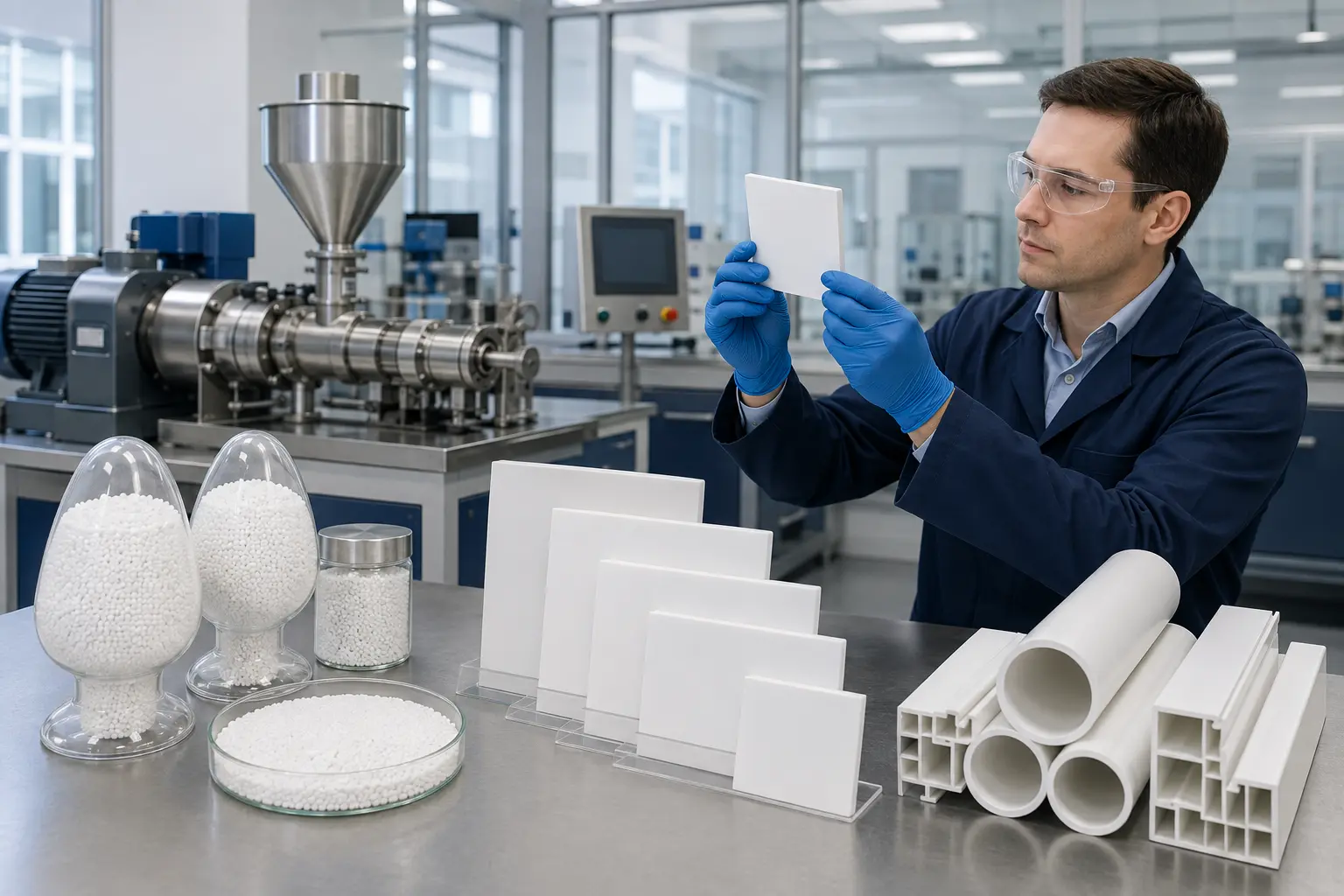 Polymer formulationMasterbatch, plastics & PVCReview formulation path →
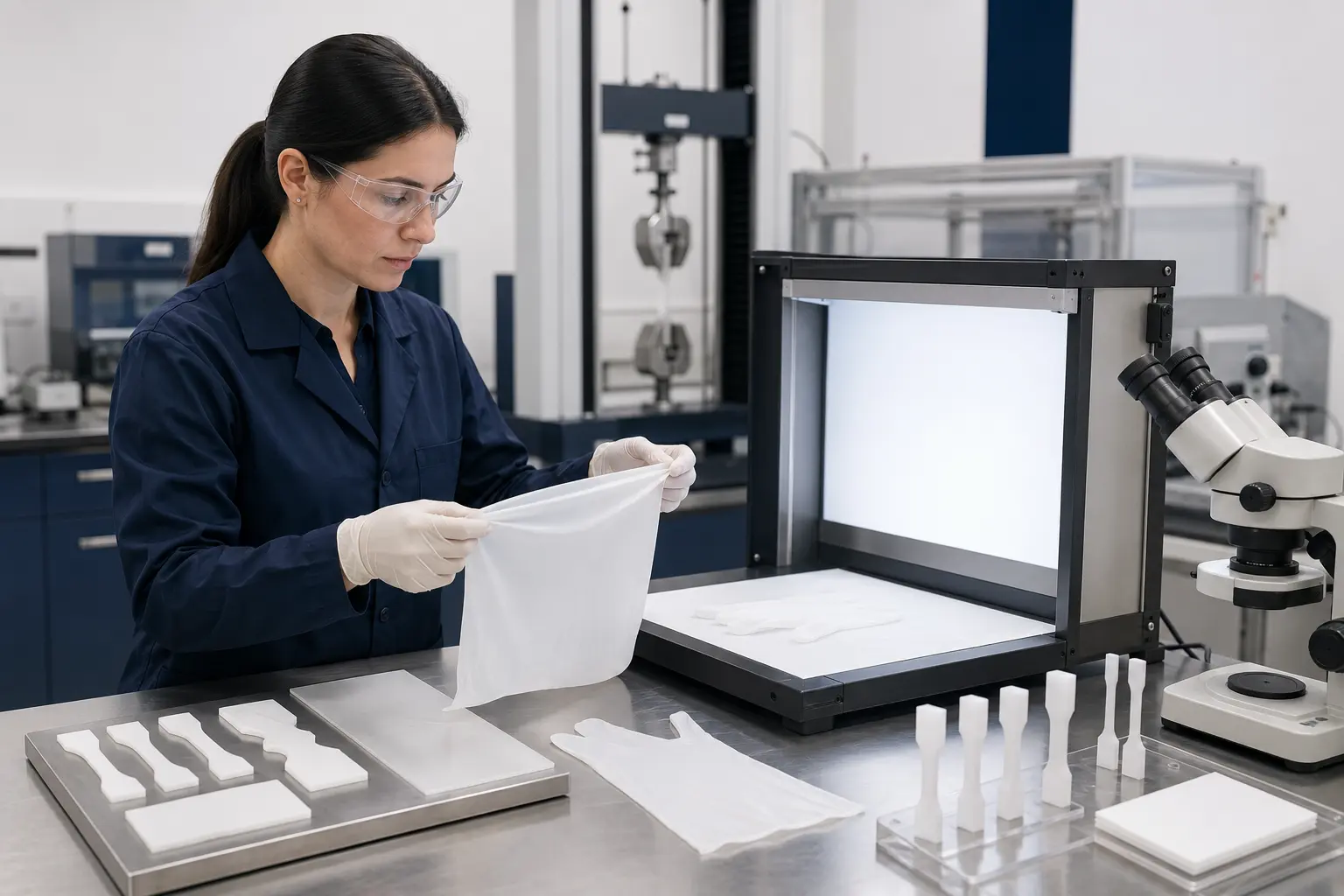 Surface qualityIndustrial, glove & rubber systemsReview formulation path →
Markets & applications
TYNOX selection begins with the actual binder or polymer, incumbent TiO2 grade and loading, filler package, application process and measurable pass/fail criteria.
Screen X-Paque or X-Pure inside the real waterborne or solventborne formulation when the project targets TiO2 efficiency, opacity, porosity, gloss, surface smoothness or total formulation cost.
Evaluate the technology in the actual resin, solvent or water system and proofing method. White-ink economics matter only after opacity, printability, lamination and resistance requirements are held.
Start with the polymer, TiO2 loading and conversion process. Any optimization must preserve dispersion, whiteness, opacity, mechanics, heat history and line performance at the intended production rate.
TYNOX publicly identifies glove and industrial customer segments. These projects require system-specific screening because cure chemistry, porosity, surface appearance, film integrity and resistance properties can change with reformulation.
Technology focus
Optimization is not a blanket percentage-reduction claim. A credible result compares a controlled reformulation against the current commercial standard.
Evaluate lower titanium-dioxide demand while holding the required finished-product performance.
Measure hiding and color in the finished application at the required film thickness or geometry.
Include porosity and film integrity in the trial where the application requires them.
Evaluate gloss, surface smoothness, brightness and rub resistance with the full specification in view.
Measure total formulation economics after technical performance is demonstrated—not raw-material price alone.
Technical qualification
TYNOX technical answers
TYNOX gives formulators a controlled way to study TiO2 efficiency, opacity, porosity, gloss and total cost-in-use in the product they actually manufacture. Product-level details require verified access.
No. TYNOX is evaluated through a controlled reformulation using the actual TiO2, binder or polymer, fillers, process and required finished-product properties.
Potential markets include paints and coatings, printing inks, plastics, masterbatch, PVC and selected industrial or rubber applications. Final selection requires technical review.
Manufacturer statements are screening inputs, not a guarantee of a fixed TiO2 reduction or finished-product performance. Customers must validate the selected TYNOX product in the actual formulation, process and end use. Documentation, regulatory status, territory, supply and commercial terms are confirmed for each project.
Application lab · technical + procurement
Controlled reformulation studies for opacity, TiO2 efficiency, porosity, gloss, surface durability and finished-product economics.
Lock the incumbent as Formula A and calculate its mass, volume, solids and cost baseline.
Prepare a conservative three-point optimization ladder recommended for the specific TYNOX platform; rebalance on both mass and volume rather than subtracting TiO2 blindly.
Hold application thickness and test conditions constant. Measure opacity first, then rheology, gloss, porosity, scrub/rub, adhesion, durability and process response.
Repeat the winning formula, age it, verify a second raw-material lot and confirm on the production line before calculating annualized savings.
Methods named here are common starting references, not automatic specifications. Use the customer's current approved method, current manufacturer documents and written regulatory requirements for the exact grade, plant, formula and end use.
Direct access. Disciplined follow-through.
Kane leads strategy, technical-commercial development and executive decisions. Heather supports customer communication, inside sales, order coordination and day-to-day follow-up. Together, they connect specialty expertise to responsive service.
Ordinary email and WhatsApp are not secure channels and do not create a nondisclosure agreement. Please do not send formulas, customer lists, personal data, trade secrets or other sensitive information until a written NDA and an appropriate transfer method are in place.